

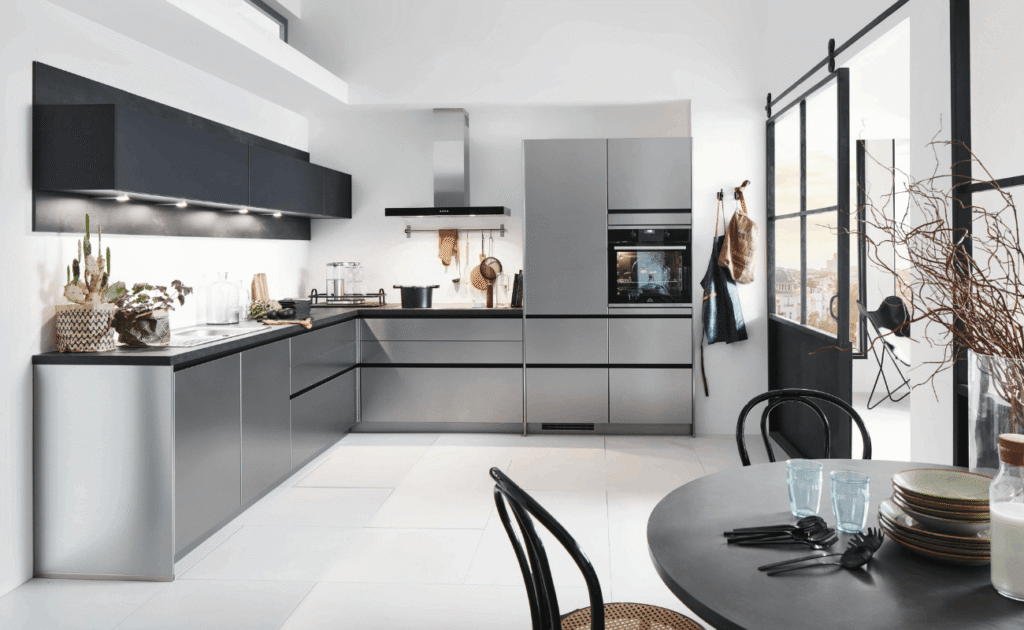
Large-scale projects such as hospitals, hotels, industrial facilities, and workforce accommodations demand interiors that are efficient, durable, and scalable. Traditional interior execution methods often struggle to meet tight timelines, budget control, and consistency requirements at this scale. This is where modular interior design is redefining how large projects are planned and delivered.
Modular interior design allows interior spaces to be planned, standardized, and executed with precision—making it an ideal solution for complex, high-volume developments.
What Is Modular Interior Design?
Modular interior design involves creating interior spaces using pre-planned, standardized modules that can be efficiently executed across multiple units or floors. Instead of designing each space individually on-site, interiors are carefully planned in advance, ensuring uniformity in layout, finishes, lighting, and detailing.
This approach is especially effective for projects where repetition, consistency, and speed are critical.
Modular interior design transforms scale into structure—delivering consistency, efficiency, and performance without compromising quality.
Why Modular Interiors Are Ideal for Large-Scale Projects
1. Consistency Across Large Developments
In projects involving hundreds or thousands of units, maintaining consistent interior quality is a major challenge. Modular interior design ensures that every unit follows the same design standards, material specifications, and finish quality—eliminating variations that often occur in traditional execution.
2. Faster Execution Without Compromising Quality
Large-scale projects often operate under strict timelines. Modular interior planning streamlines the execution process by reducing on-site decision-making and rework. With clear interior standards defined upfront, execution becomes faster, smoother, and more predictable.
3. Efficient Space Planning for High-Occupancy Use
Hospitals, hotels, and workforce accommodations require interiors that support high occupancy and daily operational efficiency. Modular interior design focuses heavily on optimized layouts, ensuring better movement flow, functional zoning, and effective use of available space.
4. Better Control Over Materials and Finishes
Material performance is critical in large projects. Modular interior design enables precise selection of durable, easy-to-maintain materials that are suitable for long-term use. Standardized finishes also simplify maintenance and replacement over time.
5. Scalability for Complex Projects
One of the biggest advantages of modular interior design is scalability. Whether the project involves 50 units or 5,000 units, the same interior standards can be applied seamlessly—making modular interiors ideal for mega developments and multi-location projects.
Applications of Modular Interior Design
Modular interior design is widely used across multiple sectors, including:
- Healthcare facilities (hospitals, clinics, isolation units)
- Hospitality projects (hotels, serviced apartments, airport hotels)
- Industrial and manufacturing facilities
- Workforce accommodations and construction villages
- Government and emergency infrastructure projects
Each of these environments benefits from the speed, consistency, and reliability that modular interiors provide.
How BurjLux Approaches Modular Interior Design
At BurjLux, modular interior design is approached with a strong focus on functionality, durability, and execution precision. Every project begins with detailed interior planning, followed by standardized detailing, material coordination, and controlled interior execution.
By aligning design intent with execution capabilities, BurjLux delivers interior spaces that are ready for immediate use, operationally efficient, and built to perform over the long term—regardless of project scale or complexity.
Conclusion
Modular interior design is no longer just an alternative—it has become a strategic solution for large-scale developments worldwide. By offering faster execution, consistent quality, and scalable interior solutions, modular interiors are transforming how complex projects are delivered.
For projects that demand efficiency without compromising interior performance, modular interior design is shaping the future of large-scale interior execution.